A Beginner's Guide to Choosing and Maintaining Home Fire Extinguishers
When I first bought my home, fire extinguishers were an afterthought. I knew I needed them, of course, but the sheer variety – different classes, sizes, mounting options – felt overwhelming. I grabbed a couple of all-purpose ones from the hardware store, stuck one under the kitchen sink and another in the garage, and promptly forgot about them. It wasn’t until a small grease fire flared up on my stovetop one evening, threatening to engulf the entire kitchen, that I realized just how little I actually knew. My ‘all-purpose’ extinguisher was heavy, awkward to wield, and, in my panic, I wasn’t even sure I remembered how to operate it correctly. Thankfully, I managed to smother the fire with a lid, but the experience was a stark wake-up call. Fire safety isn’t something to be generic about; it requires intentional choices and regular attention.
After that incident, I dove deep into understanding home fire extinguishers. What I learned transformed my approach to household safety, moving beyond just having ‘an extinguisher’ to having the right extinguishers, strategically placed and properly maintained. Most people make the mistake of thinking any extinguisher will do, or that once bought, it’s good forever. That couldn’t be further from the truth. The specific risks in your home, from kitchen fires to electrical shorts, dictate the type of extinguisher you need. And just like any other safety equipment, they require periodic checks and servicing to ensure they’ll work when you need them most.
Key Takeaways
- Equip your kitchen with a Class K (wet chemical) or specialized Class F extinguisher for grease fires, or at minimum a Class ABC with a ‘K’ or ‘F’ rating if specific kitchen types are unavailable.
- Place Class C or ABC extinguishers near electrical panels and home offices to combat potential electrical fires without causing further damage.
- Mount extinguishers within 4-5 feet of the floor in easily accessible, well-marked locations, avoiding hidden spots or extreme temperatures.
- Inspect all extinguishers monthly for visible damage, pressure gauge readings, and clear discharge nozzles, replacing or servicing as needed.
The Crucial Difference: Matching Extinguisher Classes to Your Home’s Risks
The biggest mistake I see most often is homeowners grabbing a general-purpose ‘ABC’ extinguisher and assuming it covers every scenario. While an ABC extinguisher is versatile, it’s a jack-of-all-trades, master of none. Different types of fires require different extinguishing agents. Using the wrong type can be ineffective, or worse, make the fire spread or cause a dangerous reaction. This was my initial blunder with the grease fire; while my ABC extinguisher could have put it out, a specialized kitchen extinguisher would have been far more efficient and safer.
To truly protect your home, you need to understand the five main classes of fire:
- Class A: Fires involving ordinary combustible materials like wood, paper, cloth, and plastics. These are common in living areas, bedrooms, and storage spaces. Water-based or ABC dry chemical extinguishers are suitable here.
- Class B: Fires involving flammable liquids and gases such as gasoline, oil, paint, propane, and solvents. These are typically found in garages, workshops, and near outdoor grills. ABC dry chemical, carbon dioxide (CO2), or foam extinguishers are effective.
- Class C: Fires involving energized electrical equipment like appliances, wiring, and circuit breakers. Using water on these fires can create a severe electrical shock hazard. CO2 or ABC dry chemical extinguishers are safe because they are non-conductive and leave no residue that can damage electronics.
- Class D: Fires involving combustible metals like magnesium, titanium, or potassium. These are extremely rare in residential settings and require specialized dry powder extinguishers that aren’t typically found in homes.
- Class K (or Class F in Europe/Australia): Fires involving cooking oils and fats, like vegetable oil, animal fats, or butter. These are high-temperature fires common in kitchens and require a wet chemical agent that creates a soap-like foam to cool and smother the flames. A standard ABC extinguisher can spread a hot grease fire, making Class K essential for kitchens.
What changed everything for me was realizing that my kitchen, garage, and home office each presented unique fire risks demanding specific extinguisher types. My kitchen, for instance, now proudly hosts a small, easily accessible Class K extinguisher right near the stove. For the garage, where I keep paints, solvents, and a secondary electrical panel, a larger ABC dry chemical unit is in place. And my home office, packed with computers and electronics, has a CO2 extinguisher – it’s clean and won’t ruin my expensive equipment, unlike a dry chemical powder that can corrode circuit boards. This targeted approach means I’m better prepared for the most likely emergencies in each area, ensuring rapid and effective response without escalating the danger.
Strategic Placement: Visible, Accessible, and Away From Hazards
Having the right extinguisher means nothing if you can’t get to it quickly or safely. My initial strategy of tucking them away under a sink or in a cluttered corner was critically flawed. When a fire breaks out, seconds count. You need to be able to grab the extinguisher, assess the situation, and deploy it without fumbling through cabinets or moving obstacles.
The general rule of thumb for placement is to mount extinguishers along escape routes, typically within 4-5 feet of the floor, where they are visible and easily reachable. They should be positioned near potential fire hazards but not directly in them. For example, don’t mount a kitchen extinguisher right over the stovetop; if the stove is on fire, you won’t be able to safely reach it. Instead, place it on a wall along your primary escape path from the kitchen, about 10-20 feet away from the stove itself.
In my experience, what makes a real difference is thinking through actual emergency scenarios. Can I reach this extinguisher with one hand if I need to use the other to clear a path or support myself? Is it clearly marked so anyone in the household knows where to find it? I now use clear wall mounts for all my extinguishers, ensuring they are always in their designated spot and not buried under other items. I’ve also made a point of discussing their locations with my family, even walking through mock emergency scenarios. This proactive approach ensures that in a high-stress situation, the location of the extinguisher is instinctual, not a puzzle to solve.
Another often-overlooked aspect of placement is temperature. Extreme heat or cold can affect an extinguisher’s effectiveness. For instance, water-based extinguishers can freeze in unheated garages, rendering them useless. Dry chemical extinguishers, while more tolerant, can still suffer pressure loss over time in very hot environments. Always consult the manufacturer’s guidelines for operating temperature ranges and avoid placing extinguishers in direct sunlight or near heat sources like furnaces or water heaters.
The Critical Monthly Check: Ensuring Your Extinguisher is Ready
Many homeowners treat fire extinguishers as a one-and-done purchase. They buy them, mount them, and then forget about them for years. This is a dangerous oversight. Over time, extinguishers can lose pressure, become damaged, or have their contents settle and become ineffective. A non-functional extinguisher is arguably worse than no extinguisher, as it creates a false sense of security.
What changed everything for me was adopting a simple, monthly inspection routine. This isn’t just about ticking a box; it’s about physically confirming that each unit is ready to perform. The mistake I see most often is people ignoring these visual checks, waiting until an emergency reveals a faulty piece of equipment. My routine takes less than five minutes for all the extinguishers in my home, and it’s become a non-negotiable part of my household safety plan.
Here’s my simple monthly checklist:
- Check the Pressure Gauge: For most common ABC dry chemical extinguishers, there will be a gauge with a needle. It should be firmly in the green zone. If it’s in the red, the extinguisher has lost pressure and needs to be recharged or replaced. CO2 extinguishers typically don’t have gauges but are instead weighed to determine if they’ve lost content, which usually requires professional servicing.
- Inspect for Physical Damage: Look for dents, rust, corrosion, or any signs of leakage. The nozzle should be clear of obstructions, and the hose (if present) should not be cracked or frayed. A damaged unit might fail or be unsafe to operate.
- Check the Safety Pin and Tamper Seal: The safety pin prevents accidental discharge, and the tamper seal (a plastic tie or wire) indicates that the extinguisher hasn’t been used. If the pin is missing or the seal is broken, the extinguisher might have been partially discharged or tampered with and needs professional inspection.
- “Fluff” Dry Chemical Extinguishers: For dry chemical types, invert the extinguisher and gently shake it. This prevents the powder from compacting at the bottom, which can make it difficult to discharge effectively. You should feel the powder moving inside.
- Verify Service Date: While less frequent than monthly checks, ensure you’re aware of the manufacturer’s recommended service or replacement interval, typically 5-12 years depending on the type. Some types, like disposable ones, are simply replaced after their designated lifespan.
If any of these checks reveal an issue, act immediately. Don’t wait. Either replace the disposable units or schedule professional servicing for rechargeable ones. This consistent vigilance provides genuine peace of mind, knowing that if fire strikes, my equipment is ready.
Learning to Operate: The P.A.S.S. Method and Beyond
Knowing where an extinguisher is and that it’s in working order isn’t enough; you also need to know how to use it. In the chaos of a fire, clear thinking can be hard to come by. The mistake I made, and one I see countless others make, is assuming operation is intuitive. It isn’t, especially when adrenaline is pumping.
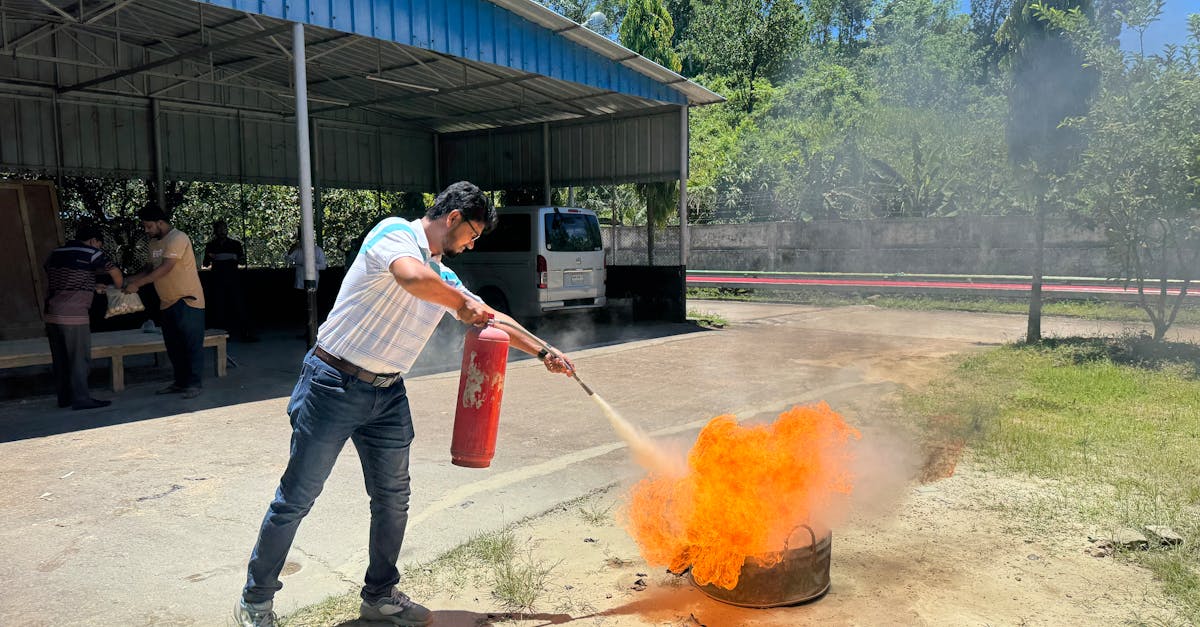
The universal method for operating a fire extinguisher is the P.A.S.S. technique:
- P – Pull: Pull the pin at the top of the extinguisher. This breaks the tamper seal.
- A – Aim: Aim the nozzle or hose low, at the base of the fire. Directing it at the flames themselves is largely ineffective; you need to cut off the fuel source.
- S – Squeeze: Squeeze the operating lever slowly and evenly to discharge the extinguishing agent.
- S – Sweep: Sweep the nozzle or hose from side to side, covering the area of the fire’s base. Continue until the fire appears to be out. Watch the area carefully; if the fire reignites, repeat the P.A.S.S. technique.
What truly changed my confidence, though, was going beyond just memorizing P.A.S.S. and actively visualizing the steps for different fire types. For instance, with a grease fire (Class K/F), I mentally practice sliding the extinguisher into position, aiming at the base of the pan, and then sweeping. For an electrical fire, I consider the distance needed to safely discharge and ensure the power source is cut if possible. Many local fire departments offer hands-on training or demonstrations, which can be invaluable. If that’s not an option, consider watching demonstration videos online, paying close attention to technique and safety considerations.
Crucially, remember that fire extinguishers are designed for small, incipient fires – those that have just started and are contained. They are not for large, rapidly spreading fires. If the fire is larger than a wastebasket, spreading quickly, or if your escape route is blocked, evacuate immediately and call emergency services. Your life and the lives of your family are far more valuable than any property.
When to Replace vs. Recharge: Understanding Extinguisher Lifespan
Fire extinguishers aren’t immortal. Even if they’ve never been used, their components can degrade, and their extinguishing agent can lose effectiveness. Knowing when to replace an extinguisher versus having it professionally recharged is a key part of responsible home fire safety.
The mistake I see most often is holding onto expired or depleted disposable units, believing they still offer protection. In reality, once an extinguisher reaches its recommended lifespan or is partially discharged, its reliability plummets. A partially discharged extinguisher may not have enough agent or pressure to put out even a small fire, leaving you in a dangerous situation.
Here’s a breakdown:
- Disposable Extinguishers: Many common residential ABC dry chemical units are non-rechargeable. They typically have a lifespan of 5 to 12 years, which should be printed on the label. Once this date passes, or if the pressure gauge drops into the red, or if they are used even for a second, they must be safely disposed of and replaced. In my experience, these are best for general areas where replacement cost isn’t a major concern.
- Rechargeable Extinguishers: Larger or more specialized units (like Class K wet chemical or CO2 extinguishers) are often rechargeable. These units should be serviced and recharged by a qualified professional after any use, even a brief discharge, or if their pressure gauge falls into the red. Rechargeable extinguishers also require periodic professional inspection and hydrostatic testing, usually every 5 or 12 years, to ensure the cylinder itself is safe. This is where the long-term value comes in, especially for kitchen-specific units or those in high-risk areas.
Always check the label of your specific extinguisher for manufacturer recommendations on lifespan and servicing. Keeping a small log or setting a recurring calendar reminder for each extinguisher’s inspection and replacement/recharge date can be incredibly helpful. This proactive approach ensures that your fire safety equipment is always in prime condition, ready to protect your home and loved ones when it truly matters.
Frequently Asked Questions
How many fire extinguishers do I need for my home?
It’s recommended to have at least one extinguisher per floor, including the basement. Ideally, place one near the kitchen, one in the garage/workshop, and another in living areas or near electrical panels. The key is to have an extinguisher within easy reach (ideally 10-20 feet) of common fire hazards or along escape routes.
Can I refill a home fire extinguisher myself?
No. Most residential fire extinguishers are disposable after use or expiration and cannot be refilled. Rechargeable extinguishers, typically larger or specialized units (like Class K or CO2), must be refilled and serviced by a qualified fire equipment professional. Attempting to refill an extinguisher yourself is dangerous and can result in an improperly functioning unit.
What do the numbers on a fire extinguisher mean (e.g., 2-A:10-B:C)?
The numbers indicate the extinguishing capacity relative to specific fire classes. The first number (e.g., ‘2-A’) relates to Class A fires, representing the amount of ordinary combustible material it can extinguish (1 unit ‘A’ is equivalent to 1.25 gallons of water). The second number (e.g., ‘10-B’) relates to Class B fires, indicating the square footage of a flammable liquid fire it can extinguish. The ‘C’ indicates it’s safe for use on Class C (electrical) fires, but without a numerical rating as electrical fires are about technique, not volume.
Where should I not put a fire extinguisher?
Avoid placing extinguishers directly above a stove or major heat source where they might be inaccessible during a fire. Also, don’t hide them in closets or behind furniture where they won’t be immediately visible. Extreme temperatures (very hot or very cold) can also damage extinguishers, so avoid unheated sheds or areas in direct, prolonged sunlight.
How do I dispose of an old or expired fire extinguisher?
Never throw an old fire extinguisher in the regular trash. If it’s a disposable unit and partially or fully discharged, or expired, contact your local fire department or hazardous waste facility for proper disposal instructions. Some fire equipment companies also offer disposal services.
Investing time in understanding and maintaining your home fire extinguishers is one of the most proactive steps you can take for your family’s safety. It moves beyond a generic purchase to an informed safety strategy. By matching the right class of extinguisher to specific risks, ensuring strategic placement, conducting regular checks, and knowing how to operate them effectively, you empower yourself to act swiftly and decisively should a small fire erupt. Don’t wait for a close call; review your home’s fire safety plan today and gain the confidence that comes with genuine preparedness.
Written by Sophia Rodriguez
Finance & Home Management
A data enthusiast by trade, Sophia brings a research-driven approach to finding efficient solutions for everyday problems.
You Might Also Like

A Practical Checklist for Choosing a Travel Backpack That Delivers Real Comfort and Durability
Don't settle for a travel backpack that causes pain or falls apart. This checklist helps you pick one for true comfort and lasting durability.

A Practical Checklist for Picking the Right Car Detailing Service
Don't waste money on subpar car detailing. Use this expert checklist to find a service that truly restores and protects your vehicle's finish, based on my experience.
Why Most Budget Home Security Systems Disappoint and Overlook Real Protection
Discover why relying on budget home security systems often leads to false peace of mind and what truly builds layered, effective protection.