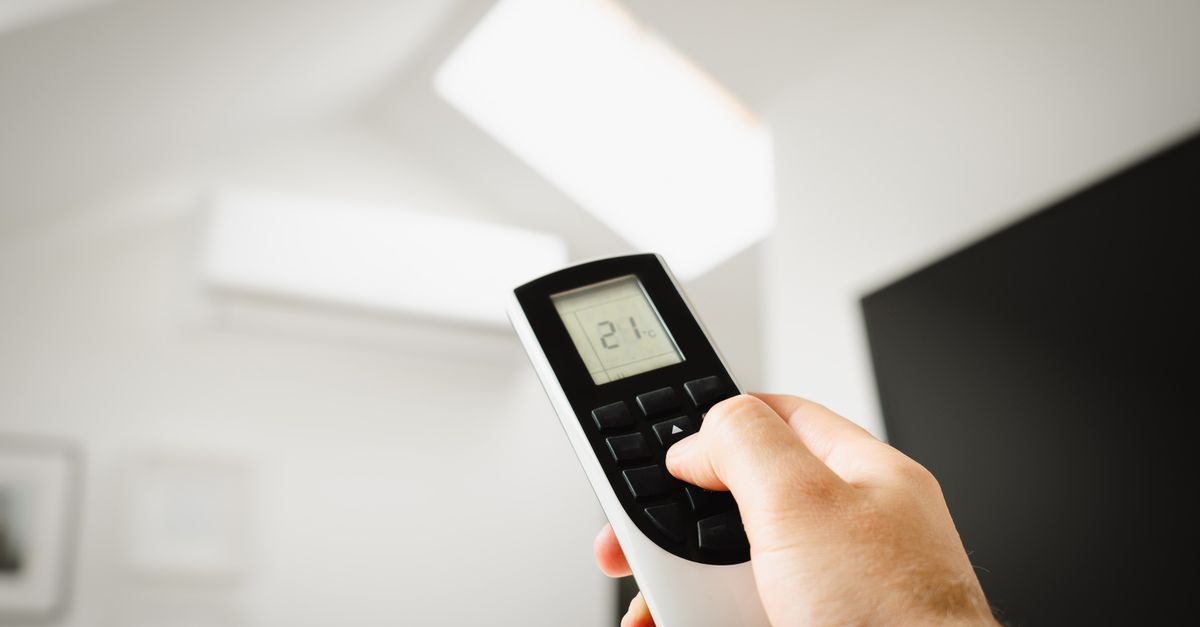
The 20-Degree Rule for Home Heating and Cooling: Why Most Advice Misses the Mark
When it comes to setting your home thermostat, you’ve probably heard variations of the ‘20-degree rule’ – keep your home at 20 degrees Celsius (or around 68-70 Fahrenheit) in winter and let it drift up a bit in summer. It sounds simple, intuitive even. The problem is, this widely quoted advice often misses crucial nuances that determine whether you’re genuinely comfortable and saving money, or just vaguely adhering to a number. In my experience, relying solely on a single temperature point without understanding its context is a common pitfall. People often find themselves either constantly fiddling with the thermostat, feeling too cold or too warm, or watching their energy bills climb despite their ‘best efforts.’
The mistake I see most often is treating the 20-degree rule as a rigid command rather than a flexible guideline. What changed everything for me, and for many I’ve advised, was realizing that true thermal comfort and energy efficiency hinge on far more than just the air temperature. It’s about relative humidity, insulation quality, personal activity levels, and even your own physiological acclimatization. Stick with me, and I’ll explain how to truly master your home’s climate, moving beyond arbitrary numbers to find what actually works for you.
Key Takeaways
- The ‘20-degree rule’ is a guideline, not a strict command, requiring personalization based on your home and habits.
- Relative humidity significantly impacts perceived temperature, making 20 degrees feel vastly different at 30% versus 60% humidity.
- Prioritize adequate insulation and draft sealing as they dictate how effectively your chosen temperature maintains comfort.
- Implement programmable or smart thermostats to create dynamic temperature schedules that align with occupancy and activity.
- Adjust your personal clothing and activity levels as the first line of defense before touching the thermostat.
Relative Humidity Dictates Perceived Comfort, Not Just Air Temperature
The single biggest oversight when people blindly follow the 20-degree rule is ignoring relative humidity. Air temperature is only half the story. Think about it: a humid 20°C in summer can feel muggy and stifling, while a dry 20°C in winter can feel chilly and crisp. In my own home, a few years ago, I was meticulously setting my thermostat to 20°C in winter, yet still felt a persistent chill. I’d crank it up to 22°C, only for it to feel too warm, and then down again, locked in a cycle of discomfort and wasted energy.
What I learned was that when the relative humidity indoors drops below, say, 35%, the air feels much cooler than the thermometer indicates. Our bodies lose moisture more rapidly through evaporation, which has a cooling effect. Conversely, when humidity climbs above 60% in warmer months, the air feels heavier and warmer because our sweat evaporates less efficiently, hindering our natural cooling mechanism. Adding a humidifier in winter or a dehumidifier in summer at the same set temperature can make a 2-3°C difference in perceived comfort. For instance, maintaining my winter thermostat at 20°C with humidity between 40-50% feels as comfortable as 22°C with dry air, saving me a noticeable amount on my heating bill. This subtle adjustment means I’m not over-conditioning my home based on a single, misleading metric. It’s a game-changer that most ‘temperature rules’ completely miss.
Your Home’s Thermal Envelope Matters More Than a Set Point
Another critical factor often overlooked is the integrity of your home’s thermal envelope – essentially, how well your house is sealed and insulated. You can set your thermostat to a perfect 20°C, but if your attic is poorly insulated, your windows are leaky, or you have drafts under doors, that ideal temperature will quickly escape, making your heating or cooling system work overtime. This was a hard lesson for me during a particularly cold winter when my furnace seemed to run constantly, yet certain rooms remained stubbornly cool.
I realized that continually adjusting the thermostat was just putting a band-aid on a bigger problem. After a professional energy audit revealed significant air leaks around windows and doors, and inadequate attic insulation, I invested in sealing those gaps and adding more insulation. The difference was staggering. The house not only felt consistently warmer at the same 20°C setting, but my furnace cycles became significantly shorter and less frequent. The actual energy savings over the next year easily offset a good portion of the initial investment. This isn’t just about saving money; it’s about achieving genuine, stable comfort that a numerical thermostat setting alone can’t guarantee. Without addressing your home’s ability to retain the conditioned air, the 20-degree rule is effectively meaningless.
Occupancy and Activity Levels Demand Dynamic Adjustments
Following a static 20-degree rule ignores the reality of how we live in our homes. Are you home all day? Are you actively moving, cooking, or exercising? Or are you sitting still, reading a book? Each scenario calls for a different thermal strategy, yet the ‘rule’ treats all times and activities equally. In my early attempts to ‘optimize’ my thermostat, I’d set it at 20°C and forget it, only to find myself shivering while working at my desk in the morning, or sweating in the evening after an intense workout.
What I’ve found to be far more effective is a dynamic approach, best achieved with a programmable or smart thermostat. I set my winter temperature to drop to 18°C (64°F) when I’m typically at work, and then raise it back to 20°C (68°F) about 30-60 minutes before I arrive home. In the evenings, if I’m active, like doing chores or cooking, I might even dial it down to 19°C (66°F) to avoid overheating. Conversely, during a quiet movie night, 20.5°C (69°F) might feel just right. This isn’t about constant manual adjustments; it’s about setting a schedule that anticipates your presence and activity. Smart thermostats can even learn your habits or use geofencing to adjust automatically as you leave and return. This personalized, adaptive temperature management ensures comfort when you need it and savings when you don’t, making the generic 20-degree rule feel utterly inflexible by comparison.
Personal Acclimatization and Layering are Your First Line of Defense
The 20-degree rule implicitly suggests that 20°C is objectively comfortable for everyone, always. This ignores a fundamental aspect of human physiology: acclimatization and the simple power of layering. People often reach for the thermostat as their first response to feeling a slight chill or warmth, when a simpler, more energy-efficient solution is often within arm’s reach. I used to be guilty of this myself, subconsciously treating my home’s heating or cooling as an on-demand personal climate control.
Over time, I’ve trained myself to pause before adjusting the thermostat. In winter, if I feel a little cool at 20°C, my first step is to grab a sweater or a cozy blanket. If it’s summer and 24°C feels a bit warm, I’ll switch to lighter clothing, open a window for a cross breeze, or even turn on a ceiling fan, which can make a room feel 2-3°C cooler without touching the AC. This isn’t about enduring discomfort; it’s about finding your personal comfort zone within a reasonable energy-saving range. By making these small, personal adjustments, I’ve discovered that my ‘comfortable’ temperature range is actually wider than I initially thought, reducing my reliance on active heating and cooling. This habit not only saves energy but also builds a more resilient personal tolerance for minor temperature shifts, making the 20-degree rule more of a distant ideal than a practical necessity.
Frequently Asked Questions
How much energy can I really save by adjusting my thermostat by one degree?
In my experience, adjusting your thermostat by just one degree Celsius (or two degrees Fahrenheit) can lead to approximately 1-3% energy savings on your heating or cooling bill per year. This seemingly small change compounds over time. The exact savings depend heavily on factors like your home’s insulation, local climate, and the efficiency of your HVAC system. But even a small, consistent shift adds up significantly over months and years.
Is it better to keep my thermostat at a constant temperature or adjust it when I’m away?
For most homes, it is more energy-efficient to adjust your thermostat when you are away or asleep. While there’s a common misconception that continuously maintaining a constant temperature is better, it generally requires more energy to heat or cool an empty home to a comfortable level for hours than it does to let the temperature drift and then bring it back to comfort when you return. Programmable or smart thermostats excel at managing these setbacks effectively, ensuring comfort when needed while maximizing savings during unoccupied periods.
What are ideal humidity levels for indoor comfort and energy efficiency?
For optimal comfort and to prevent issues like mold growth or dry skin, I aim for indoor relative humidity levels between 30% and 50% year-round. In winter, maintaining humidity around 40-45% can make a 20°C setting feel warmer and more comfortable, reducing the need to raise the thermostat. In summer, keeping humidity below 50% helps 24°C feel cooler and less sticky, easing the load on your AC. A simple hygrometer can help you monitor this.
How long does it take for a home to adjust to a new thermostat setting?
The time it takes for your home to adjust to a new thermostat setting varies greatly depending on several factors: the size of your home, its insulation quality, the efficiency and capacity of your HVAC system, and the difference between the old and new settings. A well-insulated home with an efficient system might adjust by a few degrees in 15-30 minutes, while a larger, older home could take an hour or more to achieve a significant temperature change.
Should I turn off my AC/heater completely when I leave for vacation?
For extended absences, like a vacation, it’s generally a good idea to set your thermostat to an energy-saving setback rather than turning your system completely off. In winter, set it low enough to prevent pipes from freezing (e.g., 10-13°C or 50-55°F). In summer, set it high enough to prevent excessive heat buildup, which can stress materials and encourage mold (e.g., 28-30°C or 82-86°F). Completely shutting it off might save a little more energy but could lead to bigger problems upon your return.
Conclusion
The 20-degree rule, while a good starting point, is fundamentally too simplistic to deliver optimal home comfort and energy efficiency. It’s akin to saying ‘eat 2,000 calories a day’ without considering individual metabolism, activity, or food quality. True mastery of your home’s climate comes from understanding the interplay of humidity, insulation, occupancy, and your personal tolerance. By moving beyond a single, static number and adopting a more dynamic, informed approach – using humidity controls, sealing drafts, setting smart schedules, and layering appropriately – you’ll not only enhance your daily comfort but also see tangible reductions in your energy bills. Start by evaluating your own home’s thermal envelope and consider adding a hygrometer to your living space. These small investments in understanding your environment will pay dividends in comfort and savings for years to come.
Written by Sophia Rodriguez
Finance & Home Management
A data enthusiast by trade, Sophia brings a research-driven approach to finding efficient solutions for everyday problems.
You Might Also Like

A Practical Checklist for Choosing a Travel Backpack That Delivers Real Comfort and Durability
Don't settle for a travel backpack that causes pain or falls apart. This checklist helps you pick one for true comfort and lasting durability.

A Practical Checklist for Picking the Right Car Detailing Service
Don't waste money on subpar car detailing. Use this expert checklist to find a service that truly restores and protects your vehicle's finish, based on my experience.

Why Most Budget Home Security Systems Disappoint and Overlook Real Protection
Discover why relying on budget home security systems often leads to false peace of mind and what truly builds layered, effective protection.