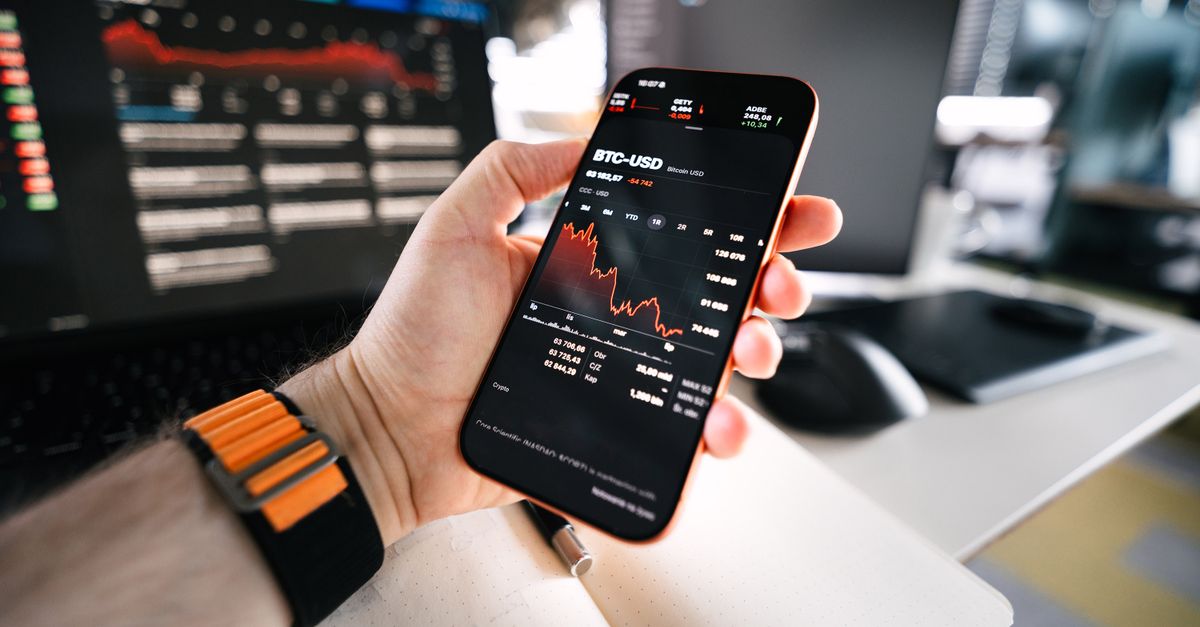
Why Most Personal Finance Apps Fail You (And The One Shift That Actually Works)
Are you staring at a downloaded personal finance app on your phone, feeling a familiar mix of hope and dread? Maybe you’ve tried a few, meticulously categorized transactions for a week or two, only to find yourself back to square one, feeling like you’ve failed yet again. The app promised to simplify your money, give you clarity, and finally help you get ahead. Instead, it became another digital chore, another reminder of financial aspirations unmet.
I’ve been there. For years, I cycled through every shiny new budgeting app, convinced that this one would be the magic bullet. From complex spreadsheets disguised as apps to those that gamified every expense, I tried them all. And every single time, the initial enthusiasm would fizzle. I’d fall behind on tagging transactions, ignore the glaring red warnings, and eventually delete the app, feeling more defeated than when I started. It wasn’t until I stopped blaming myself and started looking at why these apps fail most people that my financial picture finally began to shift. The truth is, the problem often isn’t you, it’s the fundamental approach these apps take.
My experience, and the countless stories I’ve heard from clients and friends, points to a clear pattern: most personal finance apps focus on tracking without adequately addressing the deeper behavioral challenges that underpin our spending habits. They give you a rearview mirror when what you really need is a clearer path forward. What changed everything for me was realizing that true financial control comes not from obsessive real-time tracking, but from behavioral anchoring – setting up your money systems so that good habits are the default, not an act of willpower. It’s about making your money work for you, often behind the scenes, so you don’t have to constantly think about it.
Key Takeaways
- Most personal finance apps fail by focusing too much on retrospective tracking without addressing underlying behavioral issues.
- The ‘always-on’ nature of transaction tagging creates decision fatigue, leading to abandonment.
- True financial control comes from behavioral anchoring: setting up automated systems that make good financial habits the default.
- Shift from reactive budgeting to proactive ‘envelope’ or ‘bucket’ systems to allocate money with intention before you spend it.
- Automate savings and bill payments to remove friction and reduce reliance on daily willpower.
- Regular, intentional money reviews (weekly/monthly) are more effective than constant, tedious tracking.
The Illusion of Control: Why Real-Time Tracking Backfires
The allure of real-time spending updates is powerful. You link your accounts, and voila! Every coffee, every grocery run, every online purchase appears, often categorized automatically. On the surface, this seems like the ultimate tool for financial awareness. But in my experience, this constant stream of data often leads to information overload, not empowerment. It’s like trying to drive by staring at your speedometer and gas gauge every second – you know what’s happening, but you’re not actually looking at the road ahead.
The biggest mistake I see most often is the expectation that constantly tagging transactions will magically change behavior. It rarely does. Instead, it creates what I call ‘transaction fatigue.’ Think about it: every day, you’re making dozens of small purchasing decisions. Each time you check the app, you’re faced with a micro-decision: ‘What category does this go into?’ ‘Am I over budget here?’ This mental load, however small each instance, adds up. When you have to manually assign ‘Groceries’ or ‘Dining Out’ to every single line item, especially if the auto-categorization is wrong (which it frequently is), it becomes a tedious chore. This friction is the enemy of habit formation. It’s why people quit.
Moreover, for many, seeing every penny disappear in real-time can be incredibly demotivating. If you’re already struggling with overspending, constantly being confronted with the evidence can feel like shame, not motivation. It’s like trying to lose weight by stepping on the scale every hour – the numbers might be accurate, but they don’t provide the actionable path or the emotional resilience needed to make lasting changes. We become spectators of our financial demise rather than active participants in our financial ascent.
The real insight here is that knowledge does not equal action. Knowing you spent too much on takeout last month, after the fact, doesn’t stop you from doing it again. What’s needed is a system that guides your behavior before the spending happens, and most apps are not designed for that. They’re built for data aggregation, not behavioral design. The ‘always-on’ feedback loop, meant to empower, often overwhelms and paralyzes.
The Behavioral Anchoring Shift: Proactive Allocation, Not Reactive Tracking
What truly changed everything for me was abandoning the idea of constant, retrospective tracking for behavioral anchoring. This means setting up your financial environment so that your desired behaviors (saving, paying bills, controlled spending) are the natural, effortless defaults. It’s about designing your system to prevent overspending and promote saving, rather than simply recording the damage after it’s done.
Think of it like this: if you want to eat healthier, you don’t just track every calorie after you eat it. You stock your fridge with healthy food, you meal prep, you avoid the snack aisle. You set up your environment for success. Money is no different. The apps that excel at this aren’t necessarily labeled ‘budgeting apps’ in the traditional sense; they’re platforms that allow for intentional money movement and automation. My ‘system’ now involves very little daily app interaction, yet I have more financial control than ever.
Here’s how behavioral anchoring fundamentally differs:
- Intentional Allocation: Instead of tracking where money went, you decide where money goes the moment you receive it. This is the essence of the ‘envelope system’ or ‘money buckets,’ but applied digitally. Your paycheck hits, and before you spend a dime, you allocate specific amounts to bills, savings goals, discretionary spending, and even fun money. Many banks now offer sub-accounts or ‘jars’ that make this incredibly easy, essentially creating digital envelopes.
- Automation as Default: The less you have to do manually, the more likely you are to stick to it. Automate your savings transfers to separate high-yield accounts the day your paycheck arrives. Automate your bill payments. Automate contributions to investment accounts. These aren’t just ‘good ideas’; they become the foundational anchors of your financial behavior.
- Friction for Undesired Behavior: While automation removes friction for good habits, you can strategically add friction for bad ones. Want to curb impulse online shopping? Remove your credit card details from online retailers. Want to save more for a specific goal? Make that savings account slightly harder to access (e.g., in a separate bank, or requiring a few days for transfers). This isn’t about deprivation; it’s about creating a moment of pause.
By focusing on these proactive anchors, the need for minute-by-minute transaction tagging diminishes significantly. You know, by design, that your bills are covered, your savings are growing, and the money left in your main spending account is genuinely yours to spend without guilt.
The Power of Digital Envelopes: Allocating with Intention
One of the most effective strategies I’ve implemented, borrowing from a classic budgeting method, is the digital envelope system. Traditional budgeting apps often present you with categories like ‘Food: $500’ and then track against that. The problem is, you’re constantly monitoring, trying to stay under that limit.
With a digital envelope system (often facilitated by banks offering sub-accounts, ‘jars,’ or even dedicated budgeting apps with this functionality, like YNAB), the approach is different: you get paid, and you immediately move specific amounts into dedicated digital ‘envelopes’ or ‘buckets.’ For instance, my system looks something like this:
- Checking Account (Landing Pad): All income lands here.
- Bills Envelope (Automated Transfer): Enough money to cover all fixed monthly bills (rent/mortgage, utilities, subscriptions). This transfer happens automatically on payday.
- Savings Envelope (Automated Transfer): A fixed percentage or amount that goes immediately to my high-yield savings or investment accounts. Again, fully automated.
- Groceries & Essentials Envelope: A set amount for the month. When this ‘envelope’ is empty, that category’s spending stops until next payday.
- Discretionary Spending Envelope: Money for dining out, entertainment, shopping. This is the fun money. Once it’s gone, it’s gone.
- Sinking Funds Envelopes: Separate buckets for specific upcoming expenses like car maintenance, holiday gifts, vacation, or a new laptop. I contribute to these every payday.
The critical difference: the money is physically separated (or at least conceptually separated within your banking app) before you spend it. You’re not just tracking. You’re directing. This removes the ambiguity. When I go to pay for groceries, I know I’m pulling from the ‘Groceries’ envelope. If that envelope is running low, I see it immediately and adjust my behavior proactively in the moment, rather than lamenting overspent categories at the end of the month.
This system allows for incredible flexibility while maintaining strict control. Did I under-budget for groceries this month? I can ‘borrow’ from my discretionary envelope, but I see the real-time trade-off. It’s not about restriction; it’s about conscious choice. The beauty is that once set up, the actual app interaction becomes minimal – primarily to check envelope balances or move funds between them, not to painstakingly categorize every transaction.
Automating Your Way to Financial Freedom (and Less App Time)
The cornerstone of behavioral anchoring, in my experience, is automation. Most personal finance apps, while they might integrate with your bank, don’t inherently automate your financial life. They simply present data. True power comes from setting up your bank accounts, savings accounts, and investment platforms to do the heavy lifting for you.
Here’s how I’ve leveraged automation to practically eliminate daily app-based budgeting:
- Direct Deposit Allocation: Many employers allow you to split your direct deposit across multiple bank accounts. This is gold. I have a portion of my paycheck go directly into my long-term savings/investment account, another into my bills account, and the remainder into my main spending account. Before I even see the money, my financial priorities are funded.
- Automated Transfers: If direct deposit allocation isn’t an option, set up automatic transfers the day your paycheck hits. Seriously, the same day. Transfer a set amount to your savings. Transfer funds to cover your bills. Transfer contributions to your various sinking funds. This takes zero willpower once set up.
- Bill Pay from Dedicated Account: All my recurring bills (rent, utilities, subscriptions) are set to draw from my ‘Bills’ envelope/account. Because money is automatically transferred there each payday, I never have to worry about missing a payment or overdrawing my main spending account.
- Round-Up Savings: Some banks and fintech apps offer ‘round-up’ features, where every transaction is rounded up to the nearest dollar, and the difference is transferred to savings. While small, this is a passive, friction-free way to save without even noticing it. It’s a great ‘set it and forget it’ anchor.
The real benefit of this automation isn’t just saving money; it’s saving mental energy. You free up cognitive space previously spent worrying about bills, checking balances, and categorizing past spending. This mental space can then be directed towards more valuable activities, or simply enjoying your life, knowing your financial house is in order by design, not by constant vigilance.
The Intentional Review: More Effective Than Daily Scrutiny
While I advocate moving away from daily, meticulous transaction tracking, that doesn’t mean ignoring your money entirely. Quite the opposite. Instead of constant reactive scrutiny, I embrace intentional financial reviews. This is where a good, simple app can still play a role, but as a tool for review, not for ongoing management.
My routine now looks like this:
- Weekly Check-in (10-15 minutes): Once a week, I log into my banking app (or a very minimalist tracking app if I’m tracking specific discretionary spending) and quickly review my digital envelopes. How much is left in ‘Groceries’? How’s the ‘Discretionary’ fund looking? Are my sinking funds on track? This isn’t about categorizing every single transaction from the past week (the automated system largely handles the big stuff), but about checking the health of my allocated funds and making small, proactive adjustments for the coming week. Maybe I need to cook at home more, or delay that online purchase.
- Monthly Financial Date (30-60 minutes): Once a month, I sit down with my partner (if applicable) for a deeper ‘financial date.’ We review our overall spending from the past month (yes, a quick glance at auto-categorized data is fine here, but it’s not the primary focus). More importantly, we look at our net worth, check in on investment growth, review our savings goals, and plan for the next month’s allocations. This is a strategic overview, not a tactical battle over past expenses.
- Quarterly/Annual Deep Dive: A few times a year, I’ll do a more thorough review of all accounts, checking for forgotten subscriptions, optimizing investment allocations, and setting larger financial goals.
This shift from constant, low-value interaction to scheduled, high-value review has been transformative. It provides clarity without the burnout. It turns money management from a dreaded daily chore into an empowering, intentional practice. The purpose of the review isn’t to judge past spending as much as it is to inform future decisions and reinforce your behavioral anchors.
The key is to find an app or banking platform that supports this intentional review, rather than demanding constant input. Look for apps that integrate well with your bank’s sub-accounts, or simply use your bank’s online interface if it’s robust enough. The goal is to get a clear snapshot of your allocated funds and progress toward goals, without getting bogged down in the minute details.
Choosing the Right ‘App’ (or System) for Behavioral Anchoring
Given my perspective, how do you choose a personal finance ‘app’ or system that actually works? The answer is to look beyond the flashy dashboards and focus on features that enable behavioral anchoring:
- Integrated ‘Envelope’ or ‘Bucket’ Functionality: This is paramount. Does your bank offer sub-accounts or ‘jars’ that act like digital envelopes? Many modern banks do. If not, look for apps specifically designed around this principle, like You Need a Budget (YNAB). YNAB, while it has a learning curve and a subscription fee, is built entirely on the ‘give every dollar a job’ philosophy, which is the core of behavioral anchoring.
- Robust Automation Features: Can you easily set up recurring transfers between your accounts? Can you split direct deposits? The more you can automate the flow of your money, the less you’ll rely on an app for daily management.
- Clean, Actionable Reporting (for Review): When you do review, you want clarity, not clutter. Look for apps that provide clear summaries of your spending against your allocated funds, rather than just a list of transactions. Visualizations that show progress toward savings goals are also highly motivating.
- Minimal Friction, Maximum Security: The app or system should be easy to use for your scheduled reviews, but it shouldn’t demand constant attention. Ensure it has strong security protocols since it’s linked to your financial life.
- Focus on Proactive Planning, Not Just Reactive Tracking: The best ‘app’ isn’t just a record-keeper; it’s a planning tool. It helps you decide where your next dollar will go, not just where your last dollar went.
For some, their existing bank’s app is perfectly sufficient once they implement the digital envelope and automation strategies. For others, a dedicated budgeting tool like YNAB (which really functions as a digital envelope system more than a traditional budgeting app) can be a game-changer because its philosophy aligns perfectly with behavioral anchoring. The key is to find a system that reinforces proactive financial decisions and reduces the need for constant, manual intervention.
Final Thoughts: Reclaim Your Financial Power, Minimize Your App Time
The fundamental reason most personal finance apps fail us isn’t because they’re bad technology, but because they often reinforce a reactive, high-effort approach to money management that goes against human psychology. Constantly tracking and categorizing every penny is exhausting and rarely leads to lasting behavioral change.
My journey to genuine financial control began when I stopped trying to force myself into an app’s rigid, reactive system and instead designed a proactive system around behavioral anchoring. By allocating every dollar with intention as soon as it arrives, automating good habits, and conducting intentional, strategic reviews, I spend less time in my money apps and more time living with financial confidence. You can too. The goal isn’t perfect tracking; it’s effortless control.
Frequently Asked Questions
Q: Why do most personal finance apps struggle to keep users engaged long-term?
A: Most personal finance apps fail long-term because they emphasize retrospective transaction tracking and manual categorization. This creates ‘transaction fatigue’ and decision overload, leading to users feeling overwhelmed, demotivated, and eventually abandoning the app due to the high effort required for minimal behavioral change.
Q: What is ‘behavioral anchoring’ in personal finance?
A: Behavioral anchoring is a strategy where you set up your financial systems to make desired financial behaviors (like saving and controlled spending) the natural, default action. Instead of constantly monitoring spending, you proactively allocate money to specific categories or goals, often through automation, reducing reliance on daily willpower.
Q: How can I implement a digital ‘envelope system’ without a specific app?
A: Many modern banks offer features like sub-accounts, ‘jars,’ or ‘pockets’ within a single checking account. You can create these virtual divisions for different spending categories (e.g., ‘Groceries,’ ‘Fun Money,’ ‘Bills’) and manually transfer money into them on payday. Some banks also allow you to nickname accounts for easier identification.
Q: Is it truly possible to manage money effectively without daily app interaction?
A: Yes, it is. By implementing behavioral anchoring strategies like direct deposit allocation, automated transfers to dedicated savings and bill accounts, and a digital ‘envelope’ system, you significantly reduce the need for daily app interaction. Your money is already allocated and working for you, allowing for less frequent, but more intentional, financial reviews.
Q: What’s the biggest benefit of switching from reactive tracking to proactive allocation?
A: The biggest benefit is the shift from guilt and stress to control and peace of mind. Instead of constantly seeing where your money went and feeling bad about it, you decide where your money goes before you spend it. This proactive approach ensures your financial priorities are always met by design, freeing up mental energy and reducing decision fatigue.
Written by Sophia Rodriguez
Finance & Home Management
A data enthusiast by trade, Sophia brings a research-driven approach to finding efficient solutions for everyday problems.
You Might Also Like

Why Most Personal Finance Gurus Fail You (And What Actually Builds Wealth for Real People)
Many personal finance gurus offer tempting promises but often fail real people. Discover why and what strategies actually build wealth.

Why Most Personal Budgeting Fails (And The Intentional Flow Framework That Actually Works)
Discover why traditional personal budgeting often falls short and learn the Intentional Flow Framework for sustainable financial control.

The Silent Drain: Why Subscription Fatigue Is Costing You Thousands (And How to Reclaim Your Budget)
Subscription fatigue is draining your wallet. Discover why this happens and a simple 30-minute audit to cut recurring bills and save thousands.